
Why payment workflow is one of your biggest operational levers
Every service job eventually touches payment. That means even small improvements to how your business collects service-call fees, approves additional work, processes final balances, and handles refunds can improve the customer experience while reducing administrative work.
This resource hub covers the payment lifecycle from the moment a customer books a service call through final payment and reconciliation.
The principle
Payment should happen at the clearest point of customer commitment. For mobile service businesses, collecting an agreed service-call fee before dispatch can help confirm the appointment before technician time and fuel are committed.
The five payment stages of a service job
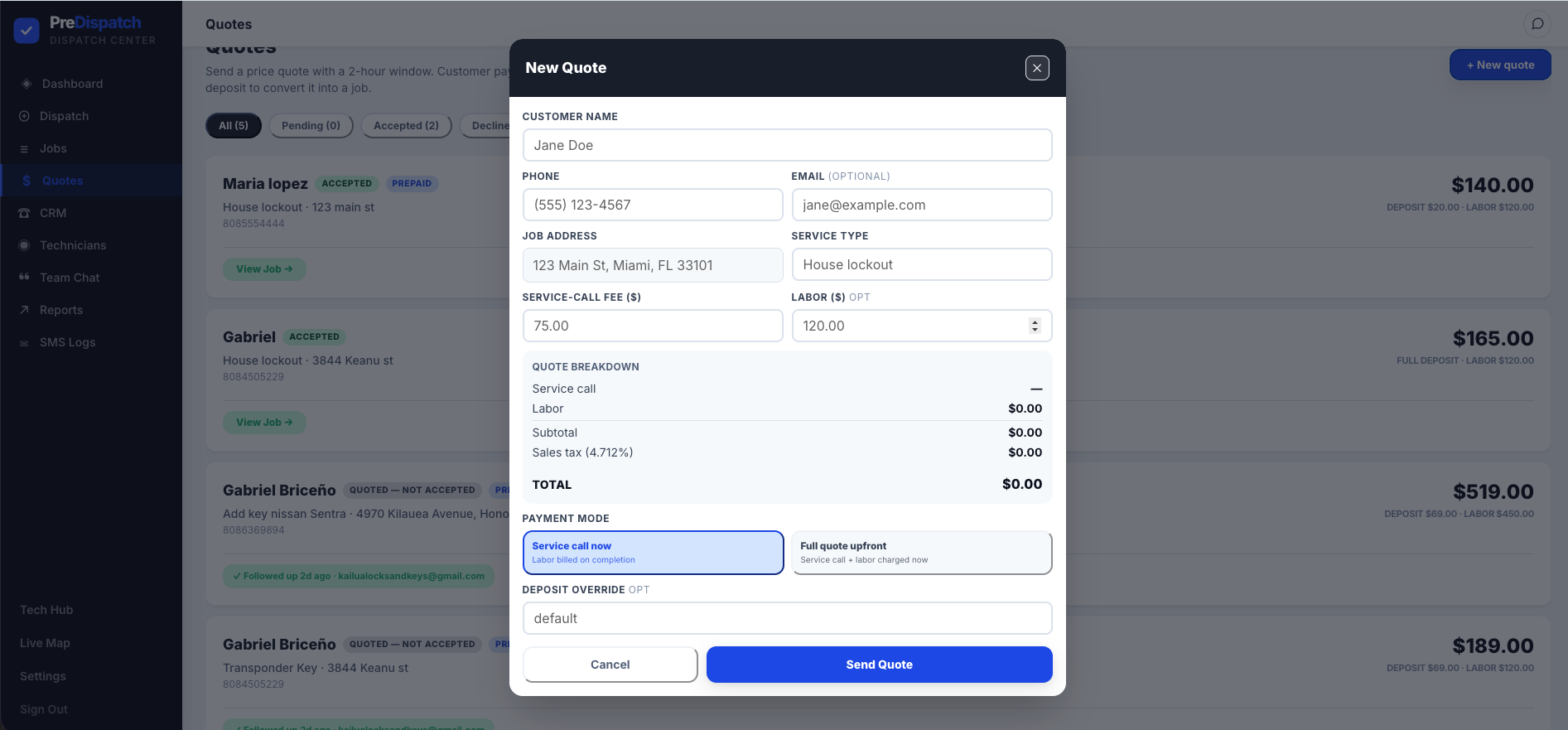
- Deposit or service-call fee. Collect the agreed payment before the technician is dispatched when appropriate.
- Quote approval. Send additional work or change-order quotes digitally so customers can review and approve the scope.
- Balance collection. Collect the remaining balance when the job is completed.
- Refund and reimbursement handling. Maintain a clear process for issuing appropriate refunds and accurately reflecting them in business reporting.
- Payment reconciliation. Keep payment records organized so completed jobs, collected payments, refunds, and business reporting remain aligned.
The guides below will explore each part of the customer payment workflow in more detail as they are published.