
Key Takeaways
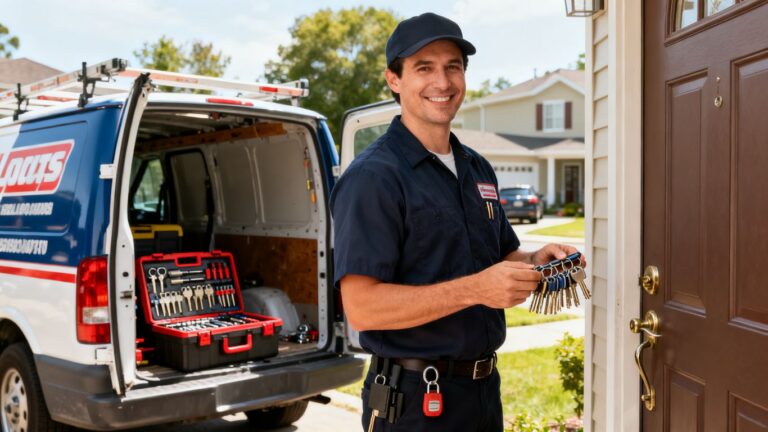
Locksmith pricing in 2026 depends less on one universal rate than on the job, timing, location, and hardware involved.
- A basic service call may be relatively simple, while vehicle keys and electronic locks can cost much more.
- Ask whether the quote includes dispatch, labor, parts, programming, travel, and taxes.
- Emergency surcharges can be reasonable when they are disclosed before work begins.
- Rekeying may cost less than replacing sound hardware when security needs have changed.
- A clear written estimate helps customers and locksmith businesses avoid misunderstandings.
What locksmith services cost in 2026
The phrase Locksmith Pricing in 2026: A Practical Guide describes a range, not a single national price. A residential lockout, a replacement car key, and a commercial security upgrade require different tools, time, and materials. Published consumer guides commonly place ordinary jobs somewhere from roughly $75 to several hundred dollars, with advanced work running higher.
Your local market matters just as much as the service name. Use broad ranges as a starting point, then confirm the actual scope with a locksmith who can explain the quote.
Typical residential service price ranges
Residential jobs often include lockouts, rekeying, repairs, and new lock installation. A straightforward home lockout may fall around $75–$350, while rekeying commonly runs about $50–$150 per lock before unusual hardware or access issues are added. Installation can range from about $100 to $450 or more per lock, depending on the hardware and door.
The lowest advertised figure may apply only to a basic daytime call. Ask whether the price covers the service visit and labor, or whether those charges appear separately after arrival.
Average automotive locksmith costs
Automotive work varies sharply by vehicle and key technology. A replacement car key may cost roughly $100–$600 or more, while a simple duplicate can be less expensive than a programmed transponder key or remote. The vehicle year, key type, cutting method, and whether all keys are lost can change the job substantially.
Have the make, model, year, and vehicle identification information ready when calling. That lets the locksmith determine whether the job needs cutting, programming, or both before giving a more useful estimate.
Commercial locksmith pricing benchmarks
Commercial pricing is shaped by door count, hardware type, access requirements, and whether the work affects a larger master-key or access arrangement. A single office lock repair may be modest, but multiple rekeys, panic hardware, restricted keys, or electronic systems can create a much larger project.
Businesses should compare the complete scope rather than a per-lock headline price. A locksmith company may also account for documentation, scheduling around business hours, and coordination with a property manager.
For locksmith businesses, collecting a payment or deposit before sending a technician can also reduce the financial risk of a wasted trip. PreDispatch is designed to help service companies collect payments before dispatching technicians, which fits that particular workflow without changing the locksmith’s quoted customer price.
How local market rates affect the final bill
Rates differ between metropolitan areas, smaller towns, and remote service zones. Labor competition, operating costs, traffic, and the availability of specialized technicians all influence what a customer sees on the final invoice. Even two reputable providers in the same region may price the same job differently because their response times and overhead differ.
A useful local comparison is to request two or three itemized estimates for the same scope. The 2026 locksmith price guide can provide additional background, but a direct quote is still necessary for a specific lock, vehicle, or property.
How locksmiths calculate your total price
A locksmith quote usually combines several components rather than one flat number. The business must account for getting a technician to the site, performing the work, supplying parts, and handling any complications that appear after inspection. Understanding those components makes an estimate easier to evaluate.
Some providers bundle charges into a flat rate; others separate them on the invoice. Neither approach is automatically unfair, provided the scope and total are explained before authorization.
Service-call and dispatch fees
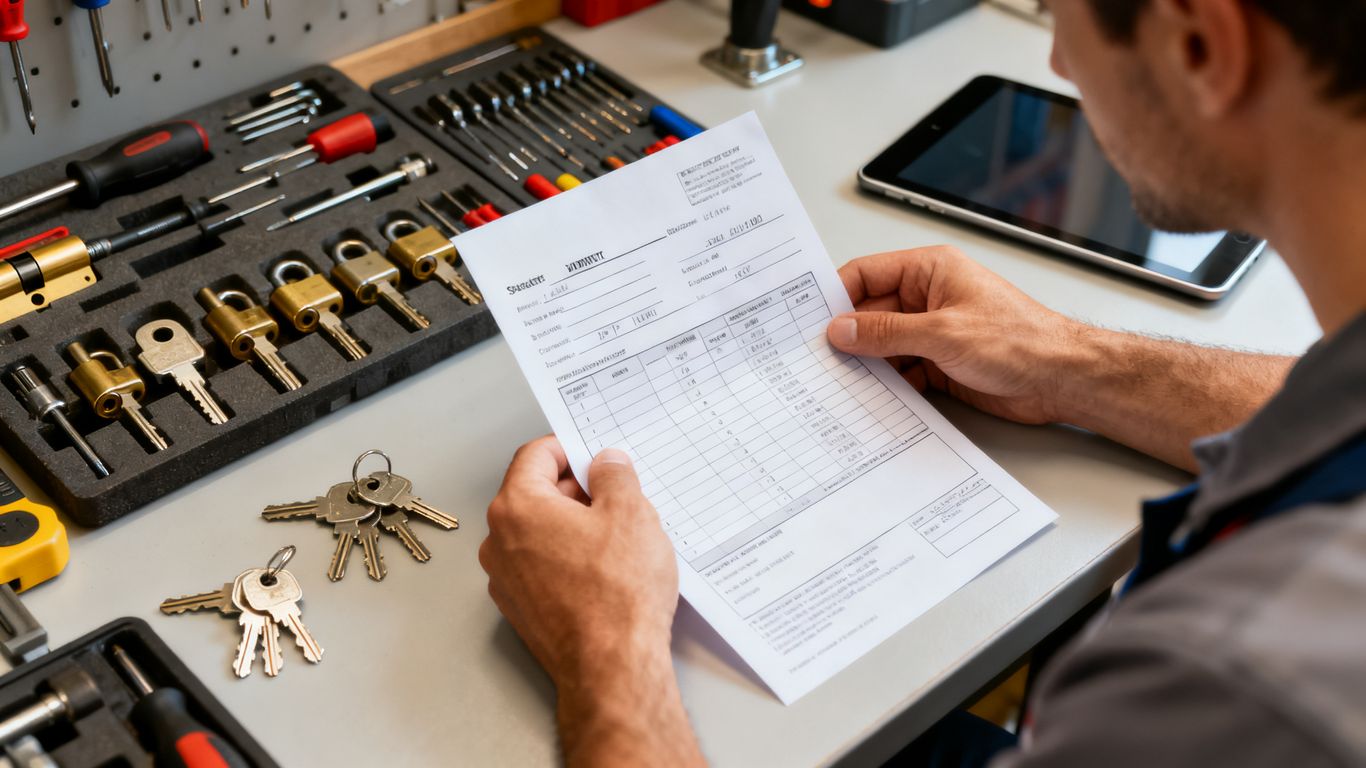
A service-call fee covers the basic cost of sending a technician to assess or perform work at the property or vehicle. It may include a limited amount of travel or evaluation time, but the definition differs by provider. Ask whether the fee is owed even if you decline the recommended repair.
Dispatch-related pricing is especially relevant for mobile businesses. A company that schedules carefully and confirms customer commitment before sending a technician may be better positioned to keep its quotes predictable.
Labor rates and minimum charges
Labor may be billed hourly, by task, or through a minimum service charge. A small job can still carry a minimum because the technician has to travel, set up tools, verify authorization, and complete payment paperwork. If the work takes longer because of a damaged lock or difficult access, the labor portion may increase.
Before approving the job, ask how additional labor is measured. A clear answer should identify the rate, the minimum, and the point at which the locksmith will pause for approval.
Parts, hardware, and replacement keys
The hardware itself can be a significant part of the bill. Basic cylinders, standard deadbolts, specialty commercial hardware, replacement remotes, and programmed keys all have different acquisition costs. The quote should identify whether the part is new, compatible, and covered by a warranty.
For a larger job, an itemized estimate helps separate labor from materials. It also gives you a practical way to compare quotes that use different hardware packages.
Travel time, mileage, and access difficulties
A distant service area may involve a travel charge or mileage fee, particularly when the job is outside the normal coverage area. Stairs, parking restrictions, gated communities, a vehicle in a crowded garage, or a door that cannot be approached directly can add time. These conditions are not always visible from a short phone description.
Share access details early, including parking instructions and whether the property is occupied. That simple preparation can prevent a second trip and help the locksmith quote the job more accurately.
Common locksmith services and their prices
The same locksmith may handle a quick lockout one hour and a multi-door security project the next. Price depends on the service’s technical demands and the condition of the existing hardware. The ranges below are useful for orientation, not promises of a final invoice.
When a job involves electronic components or a complex key system, ask what part of the price covers diagnosis and what part covers replacement. That distinction can matter if the original hardware turns out to be repairable.
Home and business lockout service
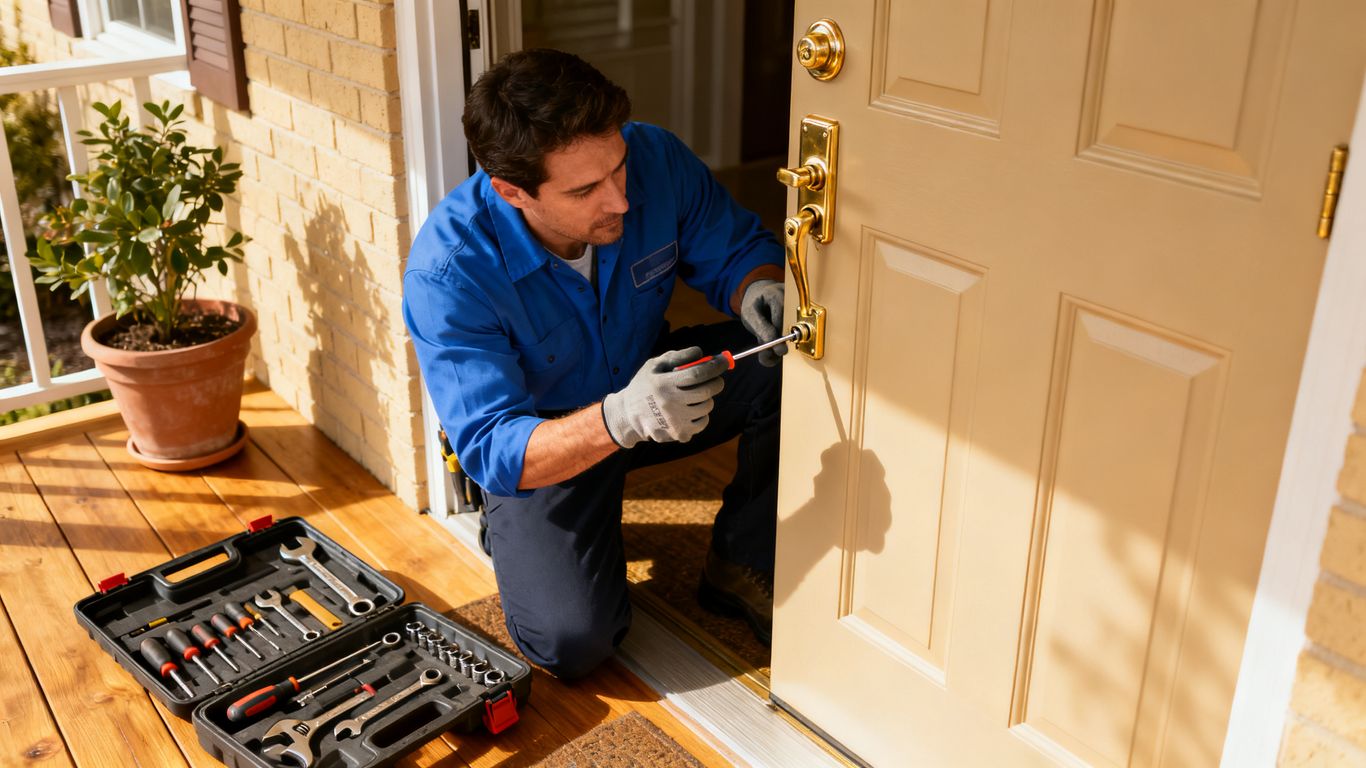
A lockout is often priced by urgency, location, lock type, and the method needed to regain entry. Basic residential calls may sit near the lower end of common emergency ranges, while commercial doors, high-security cylinders, or after-hours visits can cost more. A responsible technician should verify that you are authorized to enter before working on the lock.
Describe whether the door is merely closed, fully locked, or damaged. The difference can affect both the method and the estimate.
Lock rekeying and cylinder changes
Rekeying changes the internal pin arrangement so an existing lock works with a new key. It can be a practical choice after a tenant change, lost key, employee departure, or purchase of a used property. Cylinder replacement is different: it swaps the lock component, which may be necessary when the cylinder is worn or incompatible.
Ask whether the quoted amount is per lock, per door, or for a complete group of locks. Matching several locks to one key can also change the parts and labor calculation.
Lock repair and full lock replacement
Repair is often sensible when the lock body, strike, or latch is sound but misaligned, loose, or worn. Full replacement makes more sense when the mechanism is damaged, security requirements have changed, or compatible parts are no longer available. Door condition can be just as important as the lock itself.
A locksmith should explain why replacement is recommended instead of presenting it as the only option. If the door frame is warped or the strike is poorly fitted, a new lock alone may not solve the problem.
Key duplication and key programming
Basic key duplication is usually less costly than producing a key that must be cut and electronically programmed. Automotive keys may require vehicle-specific equipment, while restricted commercial keys may require authorization or a controlled key system. The number of copies and the key blank also affect the total.
For vehicle work, confirm whether the estimate includes both the physical key and programming. If all keys are missing, tell the locksmith before the appointment because the process may differ.
Smart-lock installation and troubleshooting
Smart-lock pricing depends on the device, door preparation, installation time, and the nature of the fault. A straightforward replacement may be manageable, while compatibility problems involving the door, latch, hub, or power supply can require diagnosis first. Installation should preserve reliable manual operation as well as electronic features.
Keep the product information and any existing setup instructions available. If the lock is still under warranty, check whether unauthorized modification could affect coverage before approving repairs.
For locksmith companies that want to understand how service pricing connects with operating costs, a job costing comparison can offer a useful business-side perspective. Customers will still need a job-specific quote, but owners benefit from knowing what travel and labor actually consume.
Why emergency locksmith work costs more
Emergency work often happens outside normal scheduling, with little time to combine nearby appointments or prepare standard inventory. The locksmith may need to redirect a technician, travel farther, or work in conditions that are less convenient and less predictable. Those realities can raise the price without making the charge improper.
The key distinction is disclosure. An emergency premium should be explained before work starts, not introduced after the lock has been opened.
After-hours, weekend, and holiday surcharges
Evening, overnight, weekend, and holiday calls commonly carry surcharges because staffing and availability are different. Some companies publish a separate after-hours service-call fee; others apply a percentage or higher labor rate. Ask for the actual dollar amount or calculation method.
If you can safely wait until regular hours, scheduling then may reduce the total. If the situation involves immediate safety or security concerns, the premium may be worthwhile.
When an emergency premium is reasonable
A premium is easier to justify when the provider gives a clear arrival window, identifies the extra charge, and performs the agreed work competently. It should reflect the unusual timing or response requirement, not create an excuse to multiply every line item without explanation.
Consider the risk of delay as well as the price. A broken exterior lock, a vulnerable business entrance, or a child locked inside a vehicle may call for immediate service.
How to get an upfront estimate
Give the locksmith the service address, type of lock or vehicle, timing, and visible damage. Then ask for the total expected price, including the service call, labor, parts, programming, travel, and emergency surcharge. If the final price can change after inspection, ask what specific findings would cause that change.
A text or email estimate is useful, but a clear verbal quote can also work when the terms are repeated and confirmed. Do not authorize open-ended work when the provider will not explain the pricing structure.
Warning signs of bait-and-switch pricing
Be cautious when an unusually low advertisement is not matched by a clear total, when the arriving technician is from a different business with no explanation, or when the price jumps before any meaningful inspection. Pressure to approve drilling, replacement, or cash payment immediately is another warning sign.
Pause and seek a second provider if the situation is safe to do so. A legitimate emergency does not remove your right to ask what you are being charged for.
The factors that can change your locksmith quote
A quote is only as accurate as the information behind it. Brand, security level, access conditions, damage, and parts availability can all move the final number. This is why a phone estimate may be expressed as a range until the locksmith sees the lock or vehicle.
The best way to reduce surprises is to describe the problem plainly and provide photographs when appropriate. Avoid guessing at the repair; explain what happened and what still works.
Lock type, brand, and security level
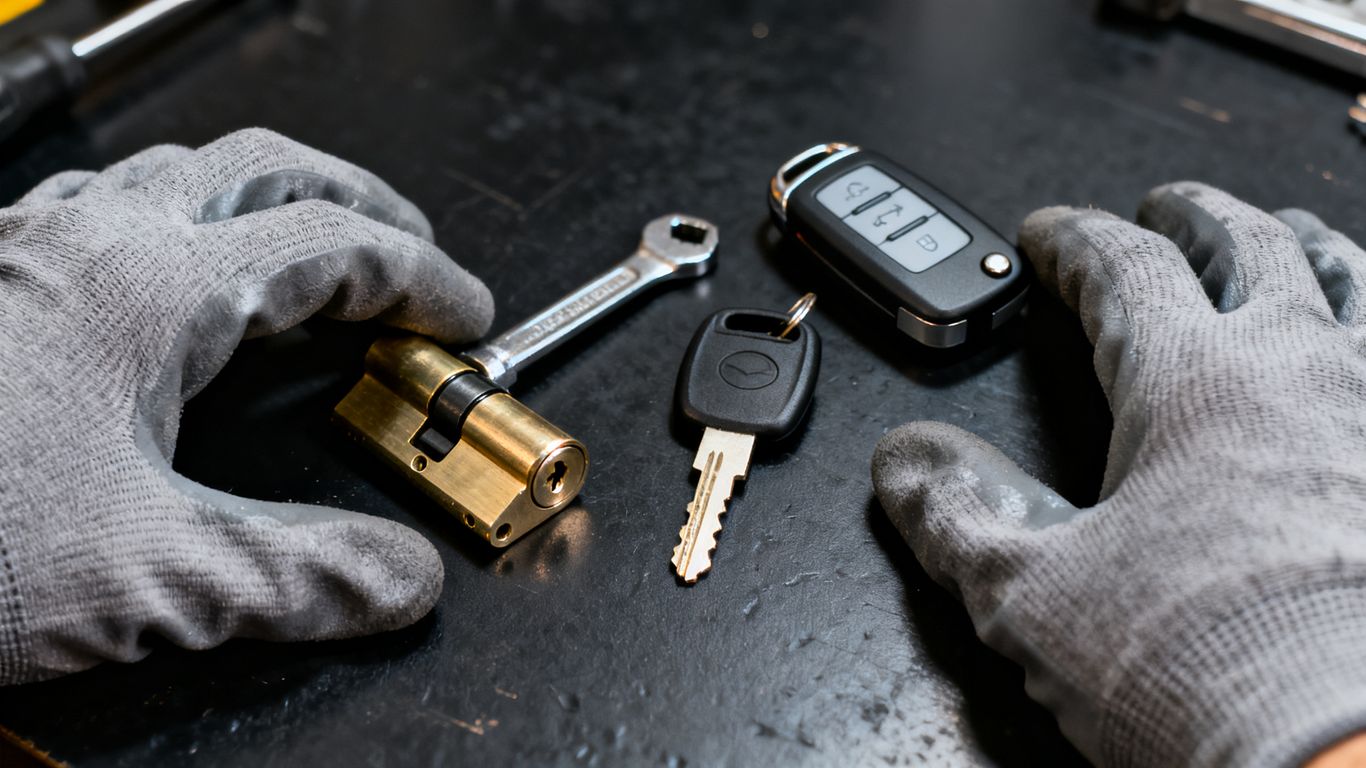
A basic pin-tumbler cylinder is not priced like a restricted key system, high-security lock, safe, or electronic access device. Brand-specific parts may also cost more or require particular tools. A lock installed in a reinforced commercial door can take longer to service than a standard residential deadbolt.
Tell the locksmith the brand and model if visible, but do not assume the label alone determines the repair. The condition of the door and the exact failure still matter.
Vehicle make, model, and key technology
Vehicle security systems range from ordinary metal keys to transponder keys, remotes, proximity devices, and other electronically managed options. A replacement may require both cutting and programming. Vehicle age, trim, regional specifications, and whether a working key remains can alter the process.
A locksmith can usually give a better preliminary range when you provide the exact year and model rather than only the manufacturer. Keep proof of ownership available as well.
Property location and job-site accessibility
A downtown loading zone, rural property, gated community, or high-rise building can affect arrival time and parking. Access instructions, elevator restrictions, and the distance from the technician’s normal service area may appear as travel or time charges.
Send gate codes and parking information before dispatch when possible. Clear instructions help the technician spend more of the appointment on the lock rather than finding the door.
Damage, broken keys, and complex entry problems
A broken key inside a cylinder, a misaligned door, or a lock damaged by attempted entry can turn a simple call into a repair or replacement. The locksmith may need to remove debris, protect the door, or restore the frame before installing hardware. Those steps should be described rather than hidden inside a vague “service” charge.
Ask whether the recommended method is intended to preserve the lock. In some cases, non-destructive entry is possible; in others, replacement is the safer or only practical choice.
Parts availability and same-day replacement needs
A same-day job may cost more when the required cylinder, key blank, remote, or commercial hardware is not stocked locally. Special-order parts can add time and shipping, while a temporary repair may allow the property to be secured until the correct component arrives.
Ask whether the estimate assumes an in-stock part. If not, request separate pricing for the temporary and final solutions so you can make an informed choice.
How to compare locksmith quotes fairly
Comparing quotes works only when each provider is pricing the same scope. A low number may exclude parts, travel, programming, or after-hours labor, while a higher number may include better hardware or a longer warranty. Put the details side by side before choosing.
For a locksmith business, this same discipline improves customer conversations. Clear pricing reduces disputes, especially when a technician is responding to a stressful call.
What a complete quote should include
A useful quote names the service, location, timing, labor basis, parts, taxes, travel, emergency charges, and expected total. It should also say whether the price changes if the technician finds damage or incompatible hardware. If programming or disposal is involved, those items deserve their own line.
Use the following as a quick comparison list before authorizing work:
- Service-call or dispatch charge
- Labor rate, task price, or minimum charge
- Parts, keys, remotes, and programming
- Travel, mileage, emergency surcharge, and tax
This list is not a substitute for a written estimate, but it helps reveal why two apparently similar quotes differ. The provider who answers each item directly is easier to evaluate.
Questions to ask before authorizing work
Ask who will perform the service, what identification or ownership proof is required, and whether the technician is insured where applicable. Confirm the arrival window and the procedure for approving additional work. It is also reasonable to ask whether the company accepts cards and provides an invoice.
Do not be embarrassed to repeat the quoted total. A short confirmation can prevent a long argument later.
Comparing licensed, insured, and unverified providers
Licensing and insurance requirements vary by state and locality, so check the rules that apply where the work will occur. Ask for the business name and verify it through an appropriate local authority when possible. Reviews can provide context, but they do not replace proof of authorization or a clear estimate.
An unverified provider may still offer a low price, but the risk is harder to assess. For security-related work, credentials and accountability are part of the value you are buying.
Evaluating warranties, guarantees, and payment terms
A warranty should identify what is covered, for how long, and whether it applies to labor, parts, or both. Payment terms should be equally plain, including deposits, cancellation charges, card fees, and the conditions for approving extra work. Read the invoice before paying if the job changed from the original scope.
Businesses may also want a process that confirms customer commitment before dispatch. PreDispatch focuses on collecting payment or deposits before a technician is sent, a practical option for service companies concerned about cancellations and unpaid calls.
How to lower your locksmith costs safely
The safest savings usually come from better information and choosing the least extensive effective repair. Trying to force a lock, bypass an electronic system, or cut a replacement key without the right tools can create damage that costs more to fix. Price should be weighed against security and reliability.
A little preparation before the call often saves more than haggling after the technician arrives. It also gives the locksmith a better chance to bring the right part on the first visit.
When rekeying costs less than replacement
Rekeying is often economical when the lock is mechanically sound and you only need old keys to stop working. It can be especially useful after moving into a home or changing staff access. Replacement may be preferable when the hardware is worn, damaged, poorly suited to the door, or no longer meets your security needs.
Ask for both options when the lock appears serviceable. The comparison should include labor and parts, not just the advertised price of a cylinder.
Preparing information before the locksmith arrives
Collect the address, lock or vehicle details, timing, photos of visible damage, and any access instructions. For a vehicle, have the year, make, model, and ownership documentation ready. For a business, note how many doors are involved and whether the work must happen outside operating hours.
These are the most useful details to prepare:
- Exact location and parking or gate instructions
- Lock brand, vehicle details, or hardware photographs
- What happened and whether any key still works
- Preferred timing and any safety or access constraints
Giving complete information can narrow the estimate and reduce the chance of a return visit. It also helps the locksmith tell you early when a job needs special equipment.
Choosing standard hardware over premium upgrades
Standard, reputable hardware may meet your needs without the additional cost of specialty finishes, restricted keyways, or connected features. Premium hardware can be worthwhile for a particular security or access requirement, but it should be a choice rather than an assumption.
Ask what practical benefit each upgrade provides and whether it changes installation or maintenance costs. A simpler system that works reliably may be the better long-term value.
Deciding when DIY is appropriate and when to call a professional
Replacing a basic interior lockset can be a reasonable DIY project if you can follow the instructions and the door is aligned. A lockout, broken key, damaged frame, high-security cylinder, vehicle key, or electronic access problem is a different matter. Mistakes can damage the door, disable a vehicle, or weaken security.
If the work affects an exterior entrance or someone’s access to a property, call a qualified professional when you are uncertain. The cost of a service visit is often lower than correcting an improvised repair.
Conclusion
Locksmith costs in 2026 are easiest to manage when you compare the complete scope rather than a headline rate. Confirm dispatch, labor, parts, travel, timing, and possible changes before work begins, and choose the least extensive safe solution. For locksmith companies, collecting a payment or deposit before dispatch can help protect the value of each scheduled call; consider reviewing PreDispatch when you are ready to make that workflow more consistent.
Frequently Asked Questions
How much does a locksmith cost in 2026?
Many common jobs fall between roughly $75 and $600, but the actual total depends on service type, location, timing, hardware, and complexity. Advanced commercial, automotive, safe, and electronic work may cost more.
What does a locksmith service call include?
It may cover travel to the site, initial assessment, and a limited amount of labor, but policies differ. Ask whether the service-call fee is separate from labor and whether it applies if you decline further work.
Is rekeying cheaper than replacing a lock?
Often, yes, when the existing lock is in good condition and only the keying needs to change. Replacement may be better when the lock is damaged, worn, incompatible, or no longer provides the desired security.
Why do emergency locksmiths charge more?
After-hours and urgent calls can require special scheduling, faster response, additional travel, or work outside normal staffing hours. A reasonable surcharge should be disclosed before the job is authorized.
How can I avoid a locksmith bait-and-switch?
Request the total expected price and ask what it includes before the technician arrives. Be cautious of vague advertisements, unexplained business-name changes, sudden price increases, and pressure to approve unnecessary work.
Does a car key replacement include programming?
Not always. Some quotes cover only the physical key, while others include cutting and electronic programming. Confirm both parts of the job, especially when replacing a transponder, remote, or proximity key.
What should I ask before hiring a locksmith?
Ask for the business name, arrival window, itemized price, labor basis, parts information, payment terms, and applicable licensing or insurance details. Also confirm how additional work will be approved if the initial estimate changes.