
What field service management actually is
Field service management (FSM) is the umbrella term for everything that has to happen between “the phone rings” and “the customer is satisfied and the books balance.” That includes dispatch, scheduling, technician management, customer relationships, payments, inventory, invoicing, and reporting.
This hub is for the operators in the middle of running that system every day — owners, ops managers, and senior dispatchers. Articles in this section assume basic operational fluency and skip the “what is dispatch” 101 explanations.
The FSM frame
Good FSM isn’t about more features in your software. It’s about the workflows you’ve designed around the few decisions that matter — and the discipline to run those workflows on a Friday afternoon when everything’s stacking up.
The seven FSM components
Whatever software you use, FSM breaks down into seven moving parts. Each one is a separate body of work; mastering each compounds the others.
- Dispatch. Getting the right tech to the right job in the right order. See dispatch hub →
- Technician management. Productivity, training, retention. See technicians hub →
- Customer payments. Deposits, balances, refunds, reconciliation. See payments hub →
- Customer relationships (CRM). History, follow-up, win-back.
- Inventory & parts logistics. Truck stocking, warehouse trips, drop-ship workflows.
- Quoting & invoicing. The money-out side of the customer relationship.
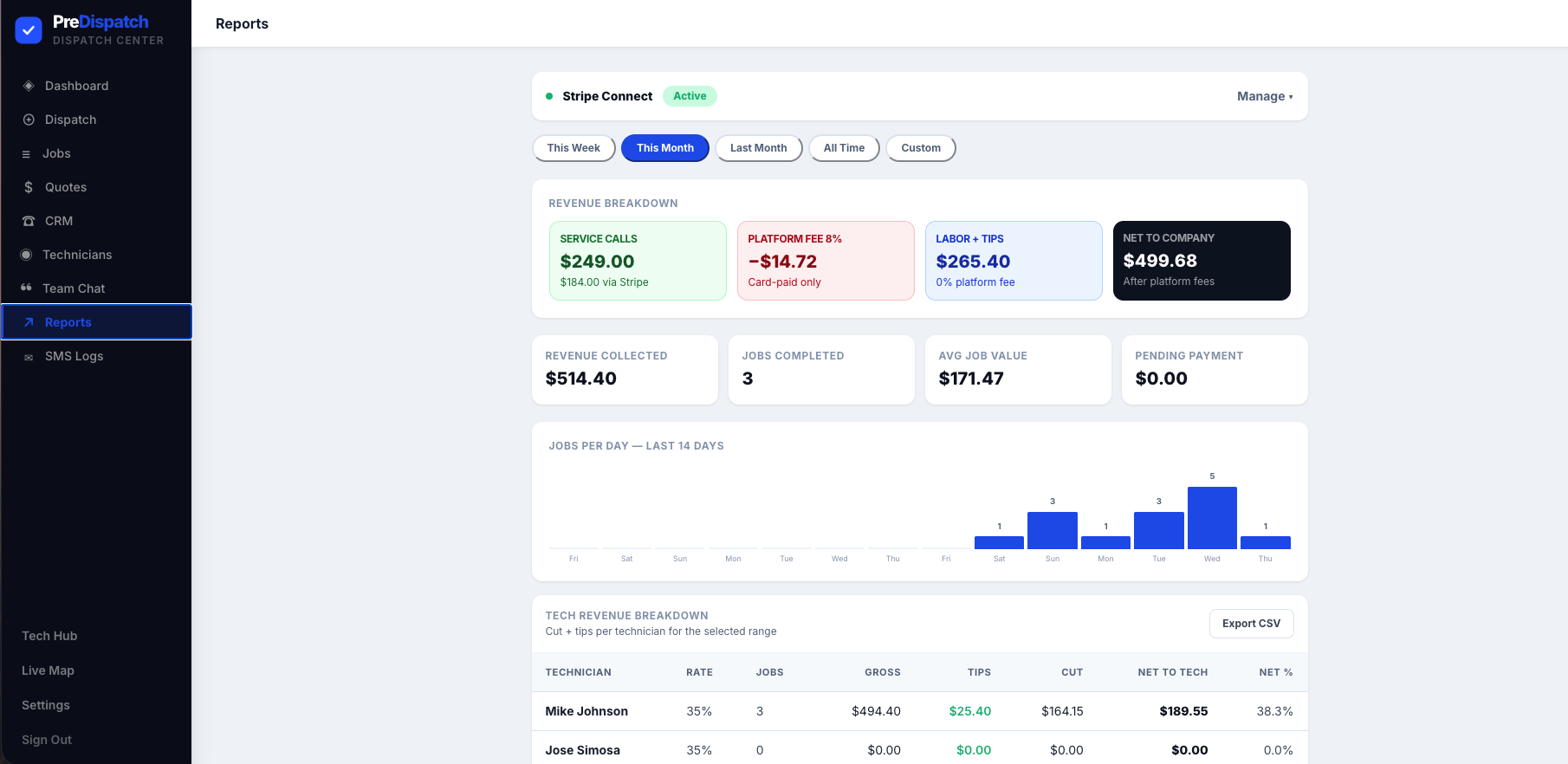
- Reporting & KPIs. The 5-7 numbers you watch daily that tell you if the system is working.
What separates well-run shops from the rest
After consulting with hundreds of service businesses, the pattern is consistent. Well-run shops do three things differently:
- They measure the right things. Cancellation rate, tech utilization, time-to-dispatch, NPS. Five numbers on one dashboard, not 47 numbers across 6 dashboards.
- They hold the line on workflow. The dispatcher doesn’t make exceptions for friends. The tech doesn’t take Venmo “just this once.” The owner doesn’t override the deposit gate. Consistency compounds.
- They invest in the dispatcher. The dispatcher is the most leveraged hire in the business after the owner. Most shops underpay and undertrain this role and pay for it daily in lost calls.