
Towing Dispatch Software & Industry Resources | PreDispatch
Industry · Towing

Towing Dispatch Software for Mobile Towing Companies

Modern towing dispatch software helps towing companies manage roadside assistance requests, driver dispatching, customer communication, payments, and emergency service calls more efficiently. PreDispatch helps towing businesses reduce cancellations, collect payments before dispatching drivers, and streamline operations from one modern field service software platform.

Towing operations hub For owners, dispatchers, and drivers Updated for 2026
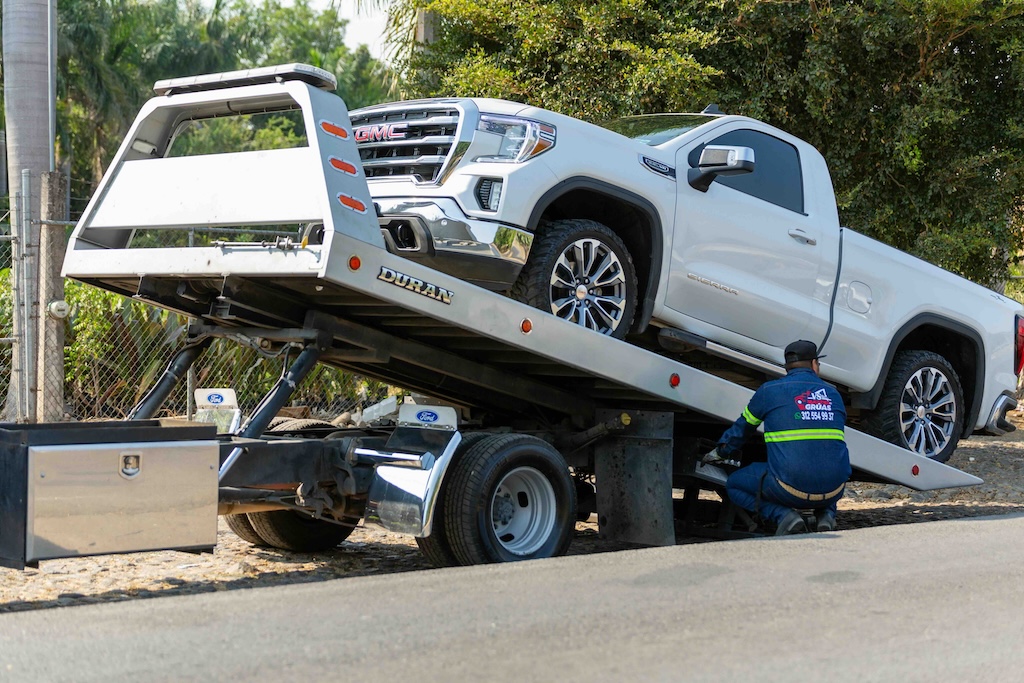
Tow truck driver loading a vehicle on a roadside service call

What is towing dispatch software?

Towing dispatch software is the system that decides which driver goes to which call, when, with what information, and whether the customer has actually committed before a truck leaves the yard. For a towing company, it replaces the dispatcher's whiteboard, the group text thread, and the sticky notes on the desk — and ties the whole thing to payment.

Towing is unlike most field-service trades in one critical way: nearly every call is an emergency, almost every customer is a first-timer, and the window between "I need a tow" and "never mind, my buddy showed up" is measured in minutes. That single dynamic is why generic scheduling tools fail tow operators and why purpose-built towing dispatch software matters.

The towing reality

A tow operation lives in two worlds at once — retail calls (accident, lockout, jump-start, fuel; the customer pays directly) and motor-club / insurance work (AAA, Allstate, rate cards). The shops that pull ahead run a separate playbook for each, and use software that can tell them apart at intake.

This page is the towing industry hub. It covers the operational levers that move the needle for a tow business — faster dispatch, fewer cancellations, prepaid retail calls, roadside workflows, live driver tracking, and job management — and links out to the deeper guides for each.

Dispatch tow truck drivers faster and more efficiently

In towing, speed wins the call. The operator who confirms and rolls a truck first keeps the customer; everyone calling after that is quoting against a driver already en route. Towing dispatch software compresses the intake-to-dispatch window so your team books the job before the competition picks up the phone.

1

Capture the call in seconds

Pickup location, drop-off, vehicle type, and service (tow, lockout, jump, winch-out) captured on one screen. Repeat customers and motor-club accounts load their history automatically.

2

Assign by proximity

The board surfaces the closest available driver with the right truck class. The dispatcher accepts the suggestion or overrides it — one tap, no phone tag.

3

Push the job to the driver

Full job ticket — address, ETA, customer contact, photos — lands on the driver's phone. Status flows back to the board without a single "where are you" call.

The payoff is throughput. When intake drops from four minutes of scribbling to under ninety seconds, a single dispatcher can run more trucks on the busiest nights without dropping calls. See how this works across any trade in our dispatch software hub, or read the deep dive on technician and driver management.

Reduce towing service cancellations and unpaid calls

This is the problem that costs tow operators the most money and shows up nowhere on the books: the truck that rolls to a retail call, arrives, and finds the customer gone, or the customer who refuses to pay once the car is on the hook. Every one of those is fuel, wear, and an hour of driver time spent for zero revenue — and a paying call you couldn't take because a truck was committed.

1 in 4
retail roadside calls cancel or no-show before the driver arrives, by most operators' own estimates
$75+
typical sunk cost of a dead-run retail call once fuel, time, and the missed booking are counted
0
dead-run retail calls once a deposit is required before the truck leaves the yard

Dispatch first, hope to collect

  • Truck rolls on a verbal "yes"
  • Customer keeps shopping competitors
  • Buddy with jumper cables shows up — call dies
  • Driver argues over price on scene
  • Unpaid calls written off quietly every week

Confirm with a deposit, then roll

  • Service-call fee collected before dispatch
  • Payment is the customer's commitment
  • Tire-kickers filter themselves out
  • Price is settled before the truck moves
  • Every dispatched call is a paid call

The moat

Most towing software helps you schedule and route. It does nothing about the customer who never intended to pay. Requiring a deposit before dispatch is the single change that eliminates dead runs on retail work — and it's the workflow PreDispatch is built around.

For the full playbook on why customers bail and how to stop it, read how to reduce cancellations in field service.

Collect payments before dispatching tow truck drivers

Prepaid dispatch is simple in practice: quote the service-call fee, send the customer a payment link by text, and let the deposit clear before the job can be marked dispatched. The truck physically cannot be assigned as "en route" until money is in — so a dead run is structurally impossible on retail calls.

How prepaid dispatch works on a tow call

Dispatcher quotes $89 hook fee → customer taps the SMS link and pays by card or Apple Pay → the job flips to "Paid," the closest driver gets the ticket, and the balance is collected on-scene at completion. No payment, no dispatch.

Carve out motor-club and insurance work

Prepaid is for retail calls only. Motor-club and insurance jobs are billed through the contract, so you exempt them from the deposit gate. The carve-out is a single tag at intake — flag the call as retail or motor-club and the deposit logic adjusts itself. You get prepaid protection where it matters without disrupting the contract work that runs on rate cards.

Dig into the mechanics in our guides on customer payment workflows and collecting payments before dispatch.

Emergency roadside assistance dispatch workflows

Roadside assistance is its own discipline. The customer is often stranded somewhere unsafe, the location is approximate, and every minute of delay raises the odds they call someone else — or that the situation becomes dangerous. A towing dispatch workflow built for roadside handles the urgency without sacrificing the controls that protect your revenue.

  • Pin the exact location. A customer-facing link captures GPS coordinates instead of "I think I'm near exit 14," so the driver routes to the car, not the cross-street.
  • Triage the service. Lockout, jump-start, fuel delivery, flat change, and winch-out each carry different pricing and truck requirements — sorted at intake, not on scene.
  • Confirm and collect fast. The prepaid link goes out in the same breath as the quote, so commitment and dispatch happen together.
  • Set a live ETA. The customer sees the driver moving on a map, which cuts the anxious callbacks that tie up your dispatcher.

For the cross-trade version of this playbook, see how to manage emergency service calls efficiently.

Real-time driver tracking and status updates

Once a truck rolls, the dispatcher's job shifts from assigning to monitoring. Real-time tracking turns the dispatch board into a live picture of the whole fleet — who's en route, who's on scene, who's clear and ready for the next call — so your team manages exceptions instead of chasing updates.

30–40%
fewer inbound "where's my driver" calls when customers get a live tracking link
5
job states every board should show: pending, paid, en-route, on-scene, clear
1 tap
for a driver to update status from the truck — no calls back to the office

Live status also feeds your numbers: average response time, time-on-scene, and truck utilization all fall out of the tracking data automatically. Those are the metrics that tell you whether you need a fifth truck or just a tighter dispatch process.

Customer payments, quotes, and towing job management

The dispatch board is only half the job. The other half is everything that turns a completed tow into clean revenue: the on-scene quote, the deposit, the balance, the photos, the signature, and the record that survives a chargeback dispute three weeks later. Good towing software keeps all of it attached to the job.

1

Quote on the spot

Send a clear, itemized quote by text before the work starts — hook fee, mileage, storage, after-hours surcharge. The customer approves it from their phone.

2

Collect deposit, then balance

Deposit clears before dispatch; the remaining balance is collected on completion by card, Apple Pay, or tap. No chasing invoices after the fact.

3

Document the job

Photos of the vehicle, signature on release, and a timestamped record — the paperwork that protects you on damage claims and payment disputes.

See how the money side works end to end in our customer payments guide, and how to send approvable quotes in online quotes customers approve.

Why PreDispatch is different from traditional towing software

Most towing platforms — Towbook, TRAXERO, Beacon — are built around routing, scheduling, and motor-club integrations. They do that well. What they don't do is protect the revenue on your retail calls, because they assume the call is already paid for or billed to a contract. PreDispatch starts from the opposite assumption: on a retail tow, the money is the risk.

Capability Traditional towing software PreDispatch
Routing & scheduling Yes Yes
Motor-club integrations Yes Carve-out / exemptBill via the contract, skip the deposit gate
Payment before dispatch NoPay-after, or a Stripe add-on you maintain NativeTruck can't roll until the deposit clears
Cancellation & no-show protection No Built in
Setup time Days to weeks An afternoon

The bottom line

Competitors optimize the route. PreDispatch optimizes the revenue — by making sure a retail truck never rolls on a call that won't pay. Run prepaid on retail, exempt your motor-club work, and keep the routing you already rely on.

Compare your options head-to-head: see all features, view pricing, or walk through how it works.

Tow dispatch built for the two-tier reality.

PreDispatch handles retail prepaid and motor-club exemption cleanly in one workflow — so every truck you roll on a retail call is a paid call.

FAQs

Common questions about towing dispatch software

What is towing dispatch software?

Towing dispatch software is the system a tow company uses to take roadside and tow calls, assign the right driver, track trucks in real time, and handle customer payments — all in one place. The best towing dispatch software also collects a deposit before the truck rolls, which eliminates dead runs and unpaid calls on retail work.

How does prepaid dispatch work for a towing company?

The dispatcher quotes the service-call fee and texts the customer a payment link. Once the deposit clears, the job flips to "paid" and the closest driver gets the ticket — the truck can't be marked dispatched until payment is in. The balance is collected on-scene at completion. Motor-club and insurance calls are exempted from the deposit gate since they're billed through the contract.

Does PreDispatch work with motor-club accounts like AAA?

Yes. You tag a call as retail or motor-club at intake. Retail calls run through prepaid dispatch; motor-club and insurance calls skip the deposit gate and bill through the contract on their rate card. You get prepaid protection on retail work without disrupting your contract volume.

How is this different from Towbook or TRAXERO?

Traditional towing software focuses on routing, scheduling, and motor-club integrations. PreDispatch focuses on revenue protection — collecting payment before a retail truck rolls so cancellations and unpaid calls stop costing you money. You can run it alongside the routing you already use, or as your primary dispatch tool.

How long does it take to set up?

An afternoon. Connect your payment processor, import your customer and account list, set your retail vs. motor-club tags, and train your dispatcher on the prepaid flow. There's no multi-week implementation project.